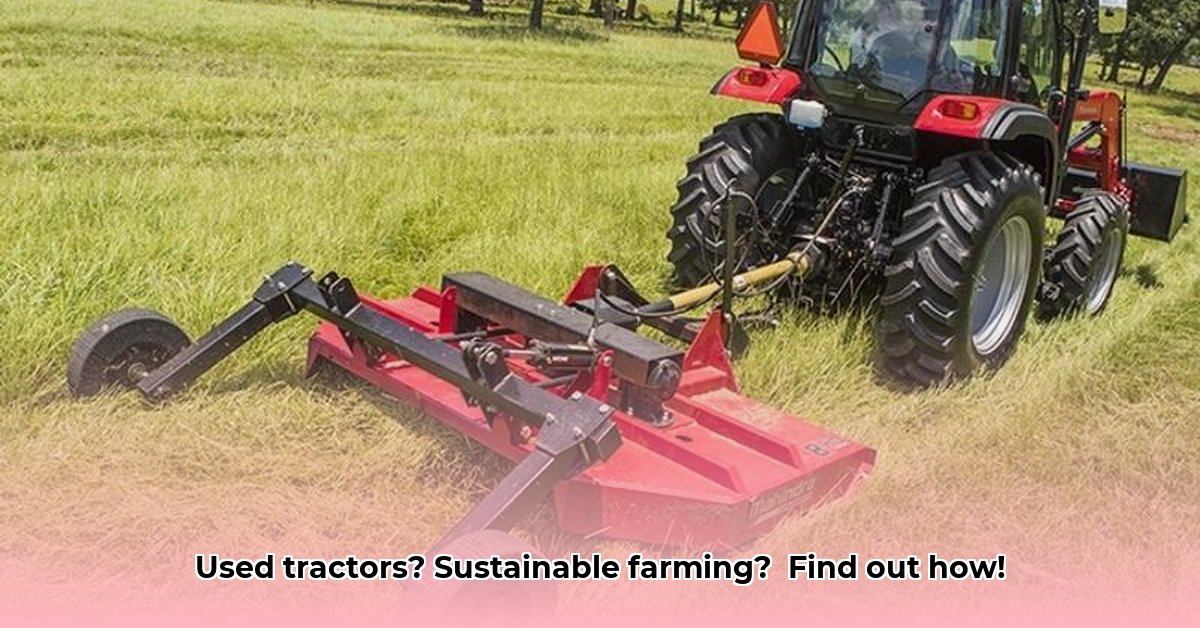
Equipment for Tractor: Your Guide to Sustainable and Affordable Farming
Sustainable farming practices are increasingly important, but the high cost of new farm equipment can be a significant barrier. Fortunately, a cost-effective and environmentally conscious solution exists: used tractor equipment. This guide provides actionable steps to help you find, maintain, and utilize pre-owned equipment for a sustainable farming operation. We'll explore everything from assessing your needs and finding the right tractor to integrating modern technologies and planning for responsible lifecycle management. To help determine a fair price, you can use this tractor value calculator.
Assessing Your Needs: Finding the Right Used Tractor
Before embarking on your search, carefully assess your farm's specific needs. What crops do you cultivate? What's the size of your operation? What are your primary farming challenges? Understanding your unique context will guide you towards the most suitable used tractor and associated equipment. This detailed self-assessment is crucial for avoiding unnecessary expenses and maximizing your investment. Remember, a well-suited smaller tractor might be more efficient and cost-effective than a larger, more expensive one that's oversized for your operation. This step also paves the way for optimizing your sustainability efforts by matching the right capacity to your actual needs. Don't overestimate!
Finding Sustainable Equipment: Where to Look and What to Ask
Finding the ideal used tractor involves thorough research. Online marketplaces like TractorHouse.com offer a wide selection. But careful vetting is paramount. Thoroughly examine maintenance records; a well-maintained older tractor often outperforms a neglected newer one. Look for signs of previous repairs and assess the overall condition. Don't hesitate to seek expert advice from experienced farmers or mechanics before committing to a purchase. Their insights can save you from costly mistakes, and their practical experience ensures you are making a sound investment. Prioritize fuel efficiency; a model known for its lower fuel consumption significantly reduces your operating costs and environmental impact.
Integrating Precision Agriculture: Enhancing Efficiency
Precision agriculture technologies aren't exclusively for new tractors. Many older models can be retrofitted with GPS guidance systems, yield monitors, and variable-rate application systems. These upgrades, while involving additional costs, dramatically improve efficiency, minimize resource waste, and reduce your farm's environmental footprint. However, ensure compatibility between your chosen technology and your tractor model before making a purchase. Consult with equipment specialists to determine appropriate upgrades and their expected impact on your farming operations. Some older machines are simpler to repair and maintain than newer models.
Lifecycle Management: Extending the Life of Your Equipment
Proactive maintenance is critical for maximizing your tractor's lifespan and minimizing environmental impact. Develop a preventative maintenance plan including regular inspections and servicing. This approach prevents costly breakdowns and extends the operational life of your equipment. Source parts proactively from reputable suppliers; downtime translates directly into lost productivity and increased expenses. Prioritize repair over replacement whenever feasible; repairing a part is often significantly more cost-effective than replacing an entire component. Finally, ensure responsible disposal at the end of your tractor's useful life; explore local recycling programs and responsible disposal options to prevent unnecessary waste and minimize your environmental impact.
Policy and Advocacy: Supporting Sustainable Practices
Sustainable agricultural practices extend beyond individual farm operations. Advocate for policies that support sustainable agriculture and responsible equipment lifecycle management. Support research into eco-friendly technologies and policies encouraging responsible equipment disposal. Your engagement in these broader initiatives strengthens the movement toward a more sustainable approach to farming. Many governmental programs offer incentives for adopting sustainable practices; research these to ensure you're maximizing potential benefits.
Fuel Choices: A Sustainable Approach
Consider exploring alternative fuels like biodiesel to further reduce your tractor's carbon footprint. However, always confirm compatibility with your specific tractor model before making a switch. An accurate assessment of biodiesel's environmental impact versus traditional diesel is also crucial. This assessment considers the entire life cycle, from production to disposal.
Real-World Success Stories: Farmers Leading the Way
Numerous farmers successfully implement used tractor equipment for sustainable farming. Research and engage with these successful examples to gain valuable insights and practical advice. Learning from experiences of other farmers provides a unique and practical resource. Their proven strategies and lessons learned can avoid costly mistakes and expedite your own success.
Weighing the Pros and Cons of Used Tractor Equipment for Sustainable Farming
| Feature | Advantages | Disadvantages |
|---|---|---|
| Upfront Cost | Significantly lower initial investment. | Potential for higher repair and maintenance costs over time. |
| Environmental Impact | Extends the lifespan of existing machinery, minimizing waste and pollution. | Older models may be less fuel-efficient and have higher emissions. |
| Technology Integration | Can often be upgraded, but compatibility may require adjustments. | Compatibility with modern technology isn't always guaranteed. |
By prioritizing thorough planning, proactive maintenance, and responsible practices, you can successfully leverage the benefits of used tractor equipment for a sustainable and economically sound farming operation. Remember, your smart choices today pave the way for a more sustainable farming future.